
Your whole tabletop life, in one place.
The minis you own (and the ones you swore you’d paint), the lists, the games, the events — any tabletop game. Free, no ads, nothing sold. It’s a hobby project, not a startup.
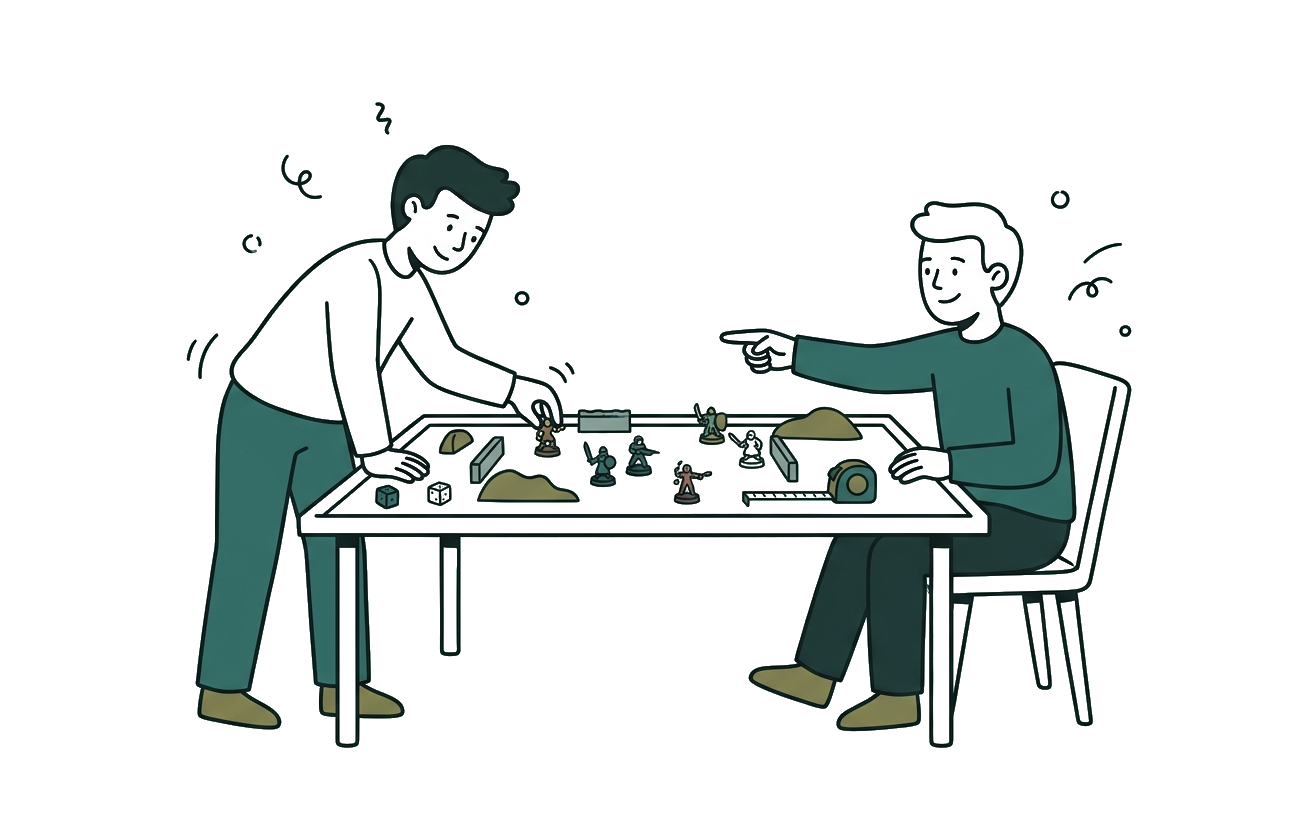
Collect
A record of what you own, what’s built, what’s painted — one list across every game you play.
Play
Log your games. Results are agreed by both players and kept with the game and rules version you played under.
Wondering what works today, what does not exist yet, and what changed last week?One honest page →
Sahul stands on years of unpaid community work — people who catalogued releases, transcribed rules and maintained wikis for nothing.
Contributors are credited only where they have specifically said yes — and if you maintain something used here and are not listed, we have not asked you yet.
Credits →What we do with your data
No tracking, no ads, nothing sold, and a page counter that sets no cookie. Make an account and we keep your email, your sign-ins and what you do here: clubs, events, games and photos. We never store your IP, and there are no passwords to leak because there are no passwords.
Built by one person
Sahul is made by John, in Australia, because he wanted it to exist. No company and no investors means nobody to please except the people using it — and it means your data is never the product.
For developers
The catalogue is public JSON — no key, no account, just fetch it. The read-write token API is live: search systems, mint your own, manage your collection. There is no MCP connector: an AI assistant uses the same API with a token.
Where it’s going
Phase one is what you’re looking at, finished properly. Phase two is intentions, not promises — we wrote it that way on purpose, so nobody gets sold a feature that’s really a sticky note.